Mandate
Define the institution-level consequence before designing the intervention.

Federal enterprise architecture and service systems for nations.
We advise entire governments—G-7 participants, NATO members, UN member states, and other national systems—on Federal Enterprise Architecture Frameworks, ITIL for Nations, and the operating models that make public capability reliable.

The mandate
The hardest problems are not isolated technology decisions. They are questions of how policy, institutions, data, infrastructure, and public services become one governable system without losing judgment, trust, or control.
We work across entire governments to define the reference architectures, service management disciplines, decision rights, and transformation cadence that turn national mandates into reliable public outcomes.
Our federal point of view01 · Federal operating systems
Our lead consultants connect national mandates to reference architectures, service disciplines, and delivery governance—the work required for the largest countries to make cross-government capability reliable.
Explore federal and public service advisoryReference models, capability maps, standards, and governance that align ministries around a shared national architecture.
02Service ownership, incident and change practice, continuity, and continual improvement for essential public services.
03Data, identity, platforms, and decision rights that let departments exchange evidence without losing sovereignty or accountability.
Six regional lenses
The architecture stays coherent while implementation changes with regulation, infrastructure, language, public-service capacity, and regional priorities. These six lenses help national leaders carry a common standard into local reality.
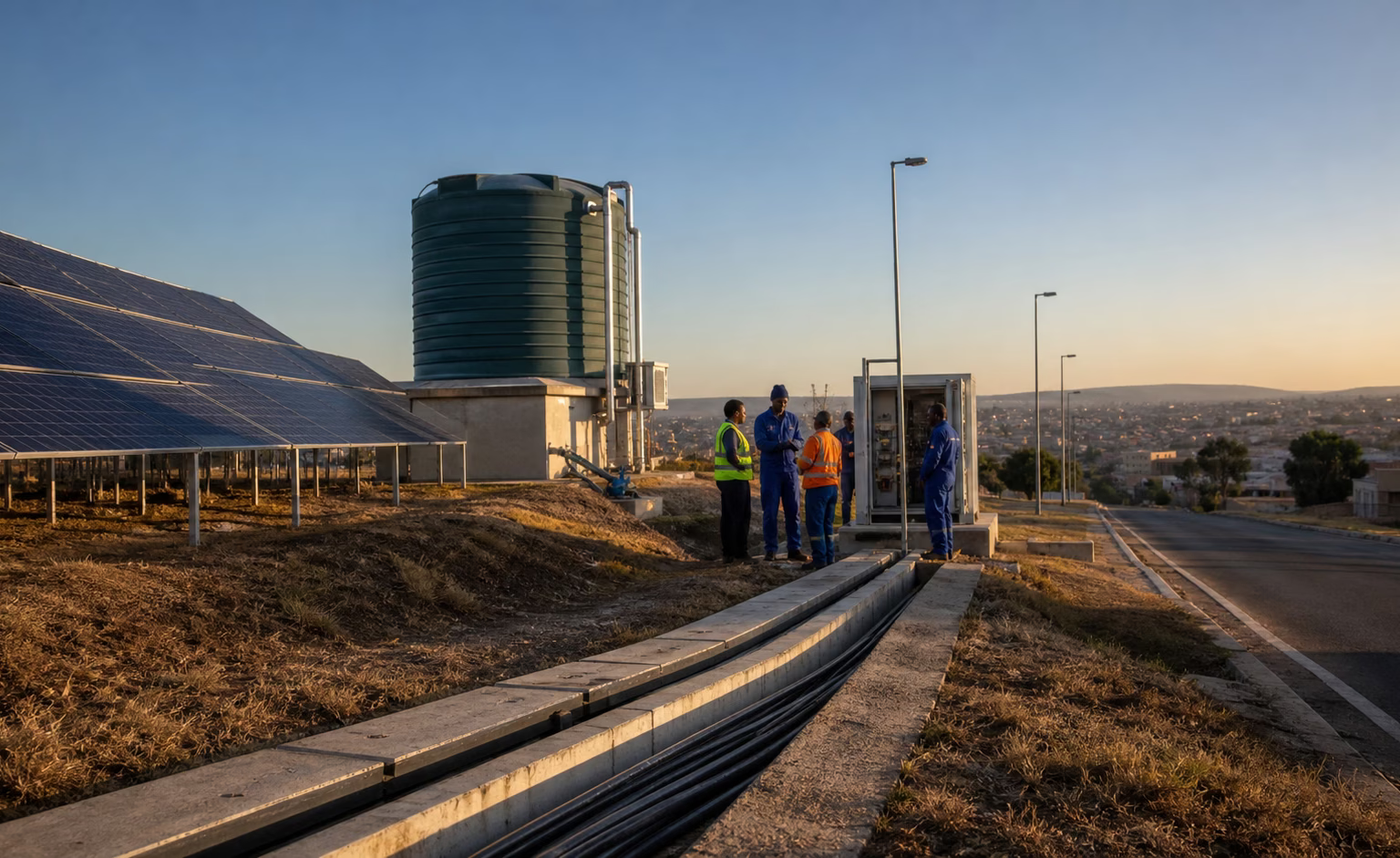
Middle East & Africa
Build the platform and the capability together.
Ambitious transformation programs need more than capital and technology. They need local capability, durable institutions, delivery partners, and a sequence that lets a new system become useful before it becomes complex.
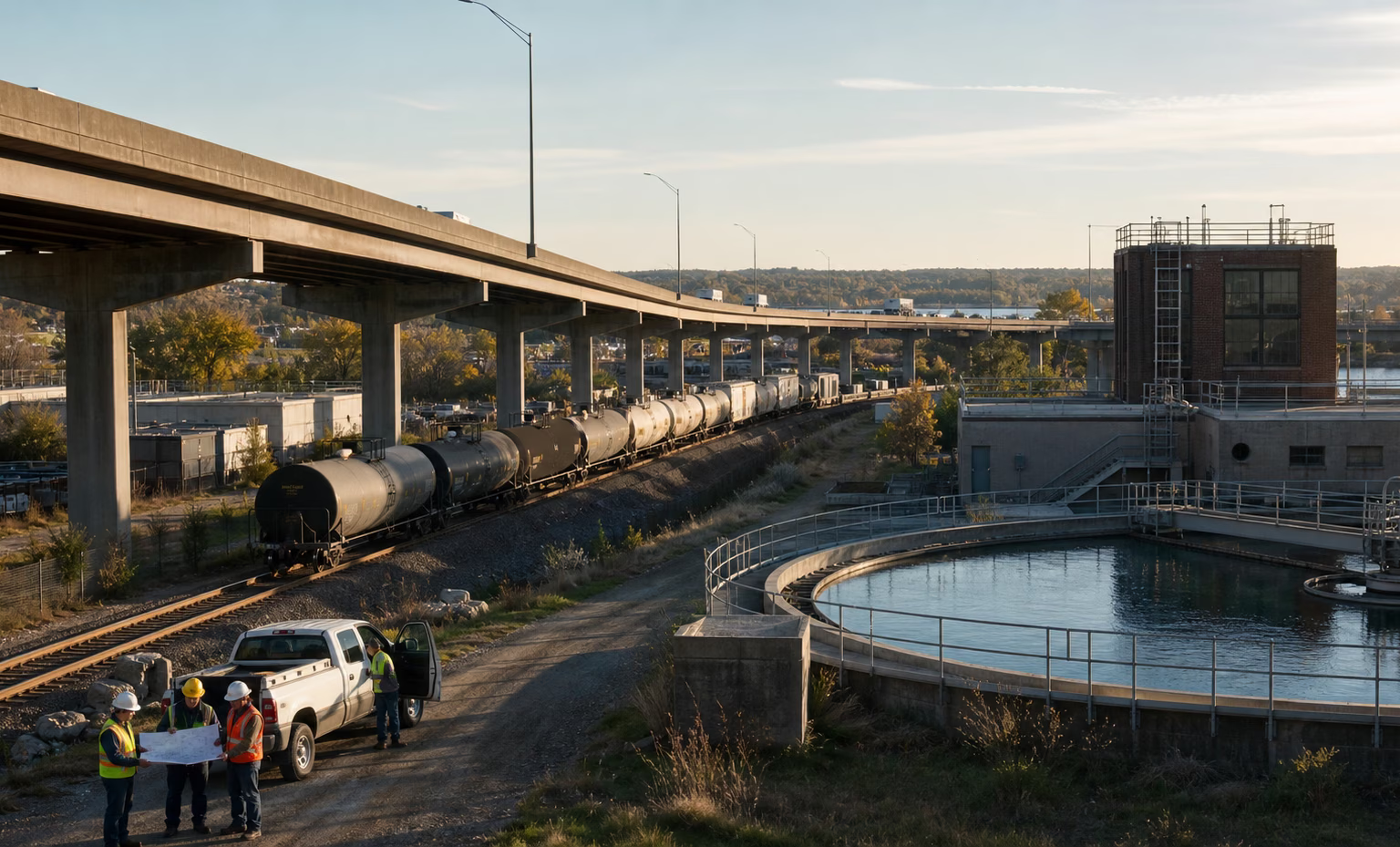
North America
Scale without losing the mission.
Large institutions are being asked to move at institutional speed while carrying public, regulatory, workforce, and infrastructure consequence. The useful question is which decisions belong close to the signal—and which require a shared control surface.

Europe
Turn principle into operating practice.
Privacy, safety, resilience, competition, and digital sovereignty are not separate workstreams. They become an operating advantage when translated into product choices, data responsibilities, evidence, and a clear path for exception.

Latin America & the Caribbean
Make trust part of the delivery architecture.
Transformation compounds when people can see who owns a decision, how data is used, and what happens when the system fails. Clear service promises and practical feedback loops are the infrastructure for adoption.
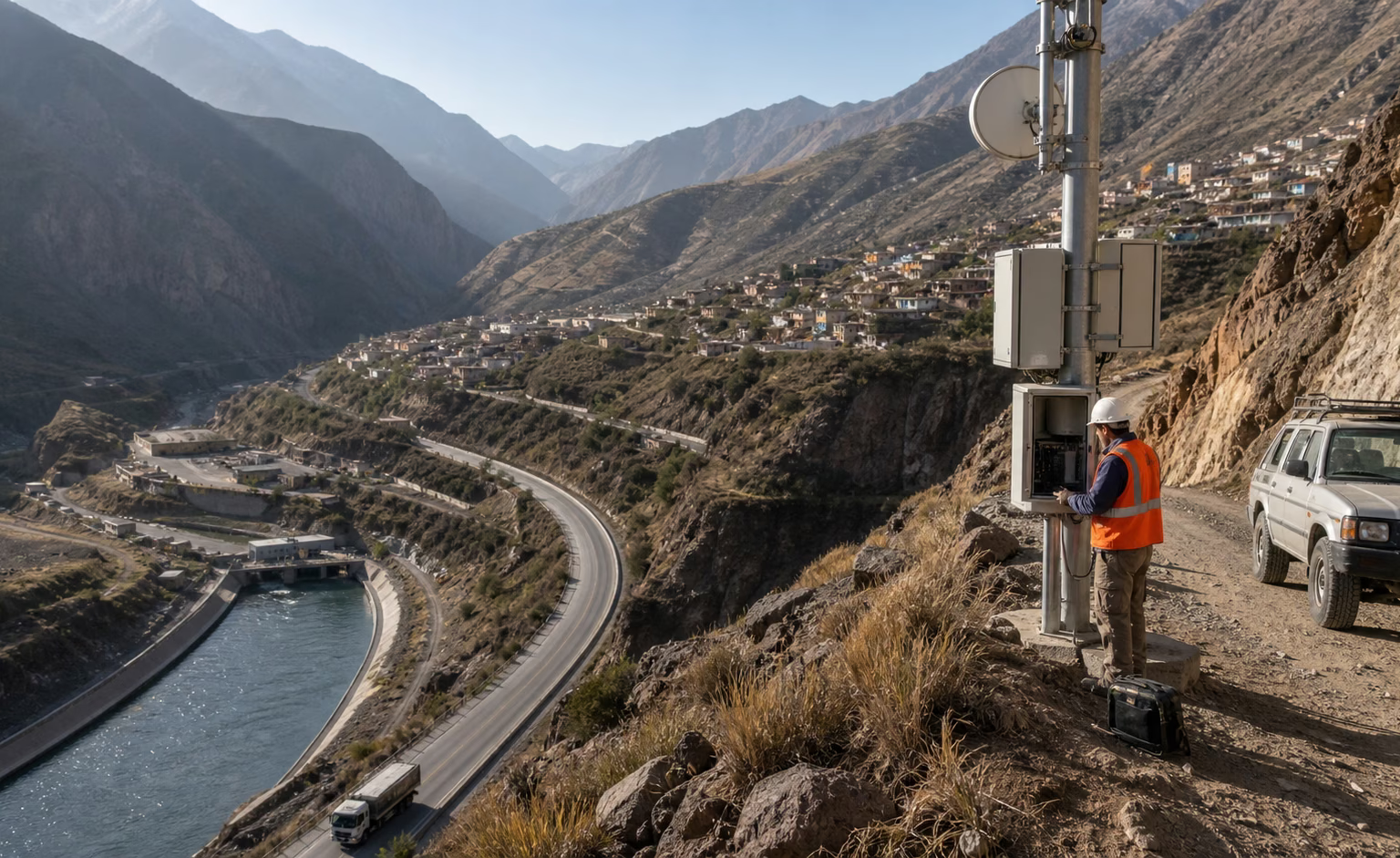
South America
Build capability around continuity.
Capability has to survive weaker grid quality, uneven logistics, and local operational constraints. The advantage comes from defining what can be standardized versus what must stay local.

Asia-Pacific
Coordinate speed across a connected system.
Manufacturing, logistics, technology, health, and public systems often cross organizational and national boundaries. Advantage comes from making the interfaces, handoffs, and decision rights visible before the network is under stress.
Context note: the hub names identify operating perspectives used in this narrative. They do not establish physical offices. Representatives and advisory channels are active across Africa, the Caribbean, Latin America, South America, and the broader global network.
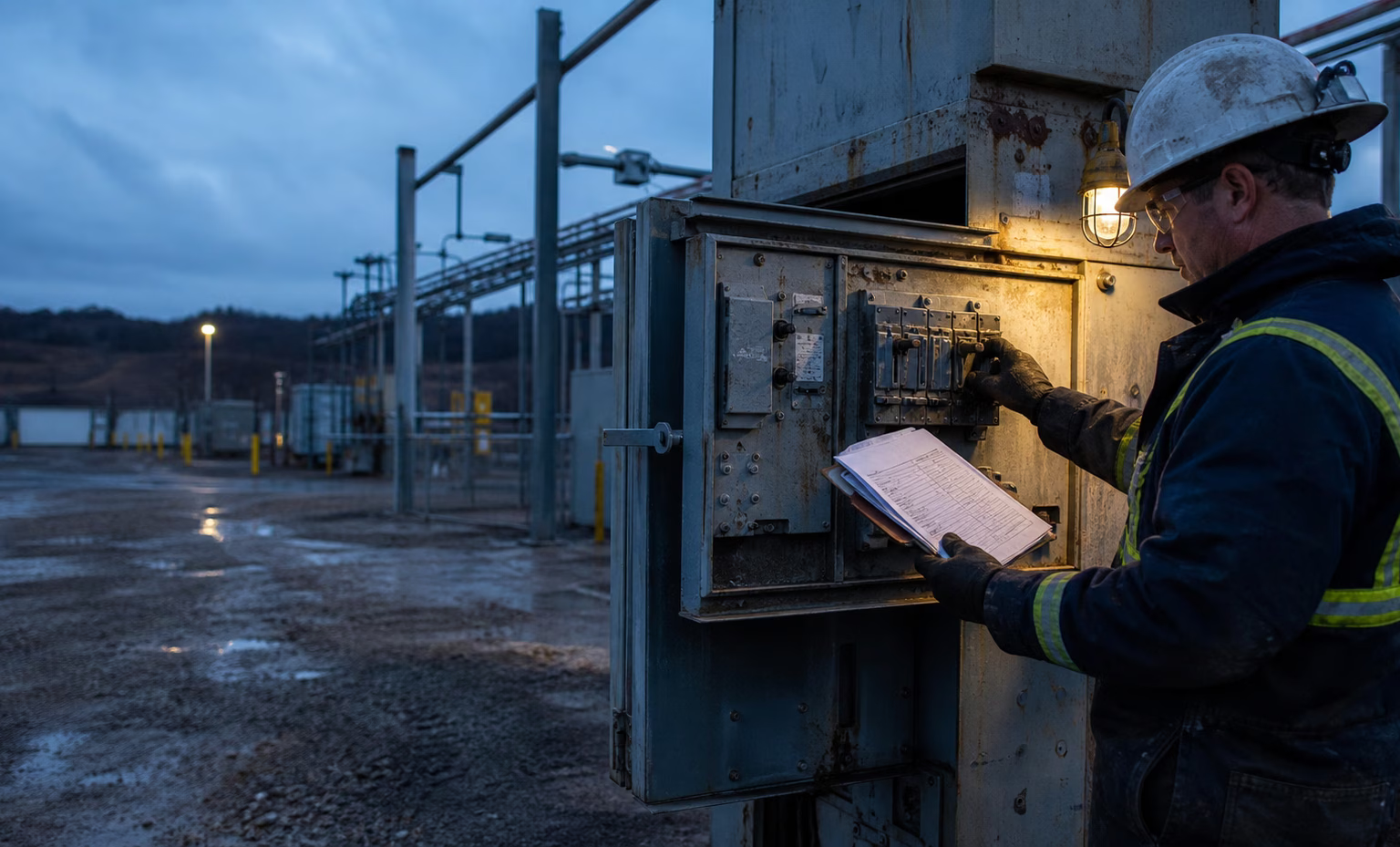
Find your starting point
Pick the pressure point that most affects your enterprise and we will direct you to the most decisive first move.
Start with operating model design that makes authority, evidence, measures, and cross-boundary accountability visible.
Explore operating model designStart with an AI lab and design the workflow, evaluation, guardrails, human role, and adoption rhythm together.
Explore enterprise AI labsStart with a data lab and AI cost-management model that connect architecture, unit economics, provenance, and decision value.
Explore data labs and AI cost managementStart with leadership, talent, and change systems that let emerging capability become a durable way of working.
Explore human capabilityThe global platform
Institutions, capital, infrastructure, digital systems, supply networks, and workforce capacity reinforce one another. The outcome is the operating system leaders have to make governable.

Authority
Foundations
Execution
Scale changes the question. Start with the dependency that is making the decision harder to carry.
Capability is the combined system
The 2050 thesis
M&A, energy, communications, and machine intelligence are becoming one infrastructure question: can civilization compound capability without losing control?
9.6B
UN DESA medium projection. Population scale changes the infrastructure question.
UN DESA ↗6B / 2.2B
ITU latest estimate. Reach still depends on quality, affordability, skills, and geography.
ITU ↗945 TWh
IEA projection. Digital expansion is also a power, grid, permitting, and resilience decision.
IEA ↗A bigger data centre, larger constellation, or faster acquisition is not automatically progress. The test is lower friction between energy and useful work, broader access, better recovery, and governance that keeps pace with the power assembled.
A transaction can combine a communications network with a satellite platform, a finance business with a data capability, an industrial operator with an energy asset, or a global brand with a distribution system. The point is a capability neither side could operate as effectively alone.
Energy, computation, communications, capital, and human capability only compound when ownership, evidence, service discipline, and local context travel with the strategy.
Evidence trail. This homepage distills the existing 2050 thesis and M&A integration capability; external source notes and review dates remain on those routes.
Cross-border M&A
Design the integration thesis that turns a transaction into a more capable cross-border operating system.
Financial diligence remains necessary, but it cannot answer the whole question. The combined system also joins networks, energy exposure, data, brands, talent, service commitments, regulatory obligations, and the decision rights that keep those parts coherent.
Mergers & acquisitionsPhysical + energy
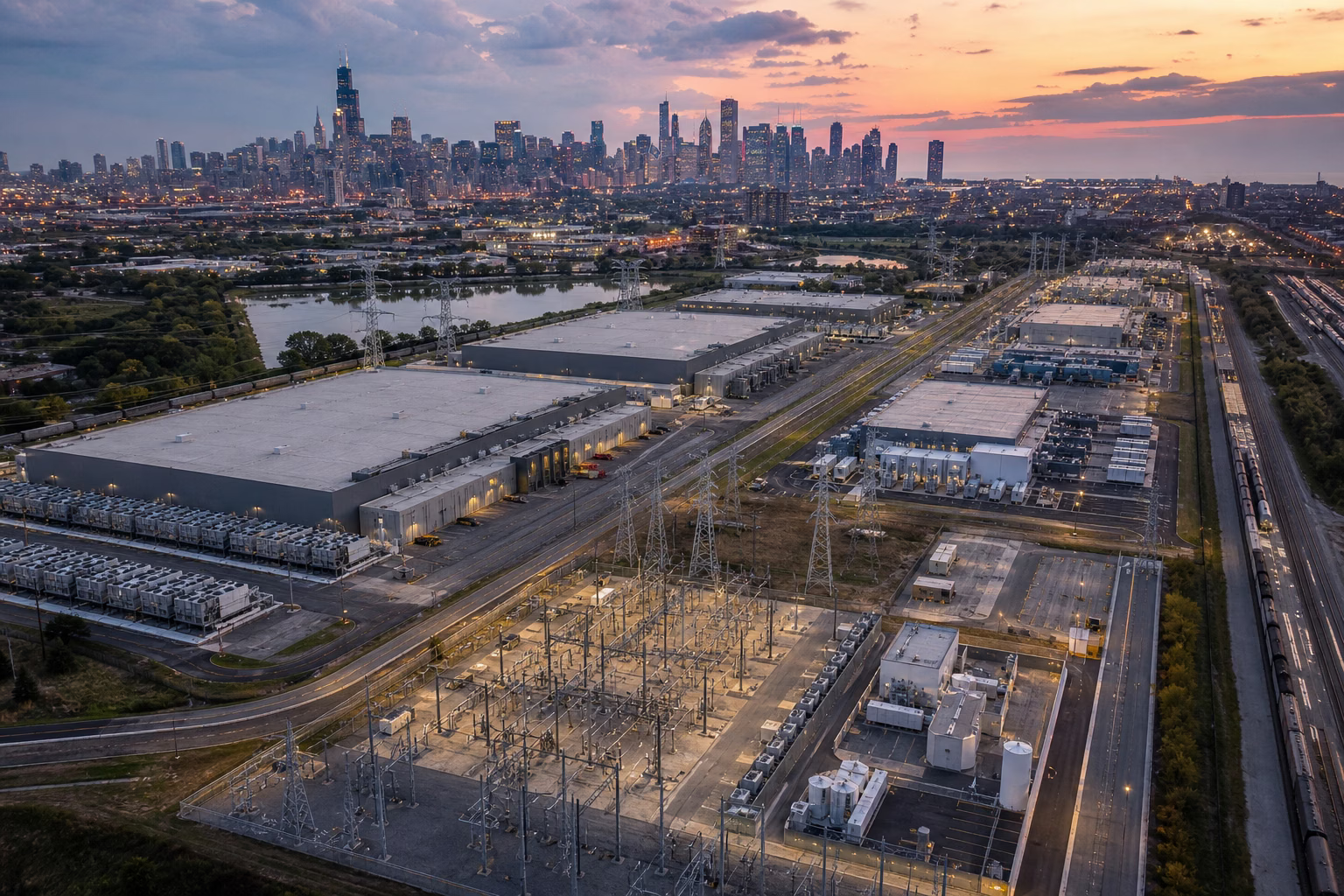
Power, cooling, facilities, transmission, spectrum, orbit, maintenance, and supply-chain dependencies determine whether the asset can work at all.
Satellite, telecom + global communications
Trace terrestrial and satellite paths, network diversity, latency, availability, coverage, sovereignty, and partner exposure across the combined system.
Data + intelligence
Make ownership, provenance, access, quality, evaluation, cybersecurity, and human review explicit before a new capability enters the workflow.
Global finance + capital
Follow cash flows, funding gates, insurance, liquidity, capital allocation, and the value of optionality under uncertainty—not just the synergy slide.
Marketing + customer systems
The brand, channel, pricing, language, regulatory boundary, and adoption friction determine whether a combined capability becomes useful in each market.
ITIL service + change
Service ownership, incidents, problems, changes, configuration, releases, continuity, knowledge, and continual improvement keep integration from becoming unrecorded exceptions.
Measure the capability
A post-close scorecard should show whether the combined system is becoming more capable, not only whether integration activities are complete.
| Measure | Question it keeps visible |
|---|---|
| Time from signal to an authorized decision | Can the combined system turn information into accountable action? |
| Service availability, recovery time, and change failure rate | Can service ownership carry the integration through release and failure? |
| Energy used per unit of useful computation or delivered service | Does additional capability convert energy into useful service? |
| Connectivity reach and quality by market, region, and customer segment | Can satellite, telecom, and terrestrial paths deliver the intended reach? |
| Critical data with an owner, provenance, access rule, and refresh expectation | Can finance, operations, and leaders trust the inputs? |
| Customer retention and adoption by market, channel, and language | Does the marketing and customer system make the promise adoptable across borders? |
| Capital deployed against the constraint that limits growth | Is global finance moving capital to the actual bottleneck? |
Measurement language is a planning frame, not a claim of client performance.
The system view
Move through the system to see the questions we keep connected when a problem crosses strategy, technology, and organizational life.
Select any stage to refresh the operational reading.
Mandate
Name the outcome, the promise, and the decision the organization has to make next.
The map is a practical sequence: align what matters, sequence what is uncertain, then secure what cannot be skipped.
See our approachMandate
Define the institution-level consequence before designing the intervention.
Workflow
Reduce ambiguity by showing how decisions propagate through handoffs and dependencies.
Platform
Align digital infrastructure with operating priorities so decisions remain auditable.
Capability
Build capacity before scale so capability survives after the project closes.
Evidence
Protect momentum with repeated measurement, not hope and one-off reporting.
Proof, field notes, and perspective
Decision-ready business reports
Concise operating briefs for leaders deciding how to govern AI, sequence modernization, and make institutional decisions move.
Browse the report library
Why Global Enterprise
Our perspective comes from working across the places where strategy becomes operational: federal missions, healthcare enterprises, technology platforms, and the people who have to carry change.
20+
Our work has evolved with emerging technology and ITIL change practice for more than two decades, always translating new capability into durable operating advantage.
AI
We bring a research posture to enterprise AI/ML, AI cost management, and governed adoption—while keeping named profiles and permissioned recognition claims in the diligence path.
501c3
Through our partnership with INSTAR Lab Inc, a 501(c)(3) research institute, we contribute to cutting-edge research across frontier intelligence and emerging systems.
Capabilities
Choose the pressure point. We will connect it to the wider system.
Clarify decision rights, accountability, and the way teams move from intent to execution.
Translate federal mission, policy, portfolio, and service intent into an architecture and transition path teams can govern.
Connect outcomes, interfaces, data, controls, delivery, and operating readiness in a solution architecture teams can build and run.
Give contracting officers, CORs, SMEs, and delivery partners a clear view of scope, evidence, assumptions, and delivery boundaries.

Selected work
Three field notes, presented as decisions and outcomes—not a gallery of repeated stock scenes.
Intelligent automation
A practical path from pilot to repeatable operating capability
Data labs & AI cost management
A more observable, secure, and decision-ready data environment
Operating model design
A shared system for decisions, priorities, and accountability

Make the next move visible
Need decision support now, not just perspective?